
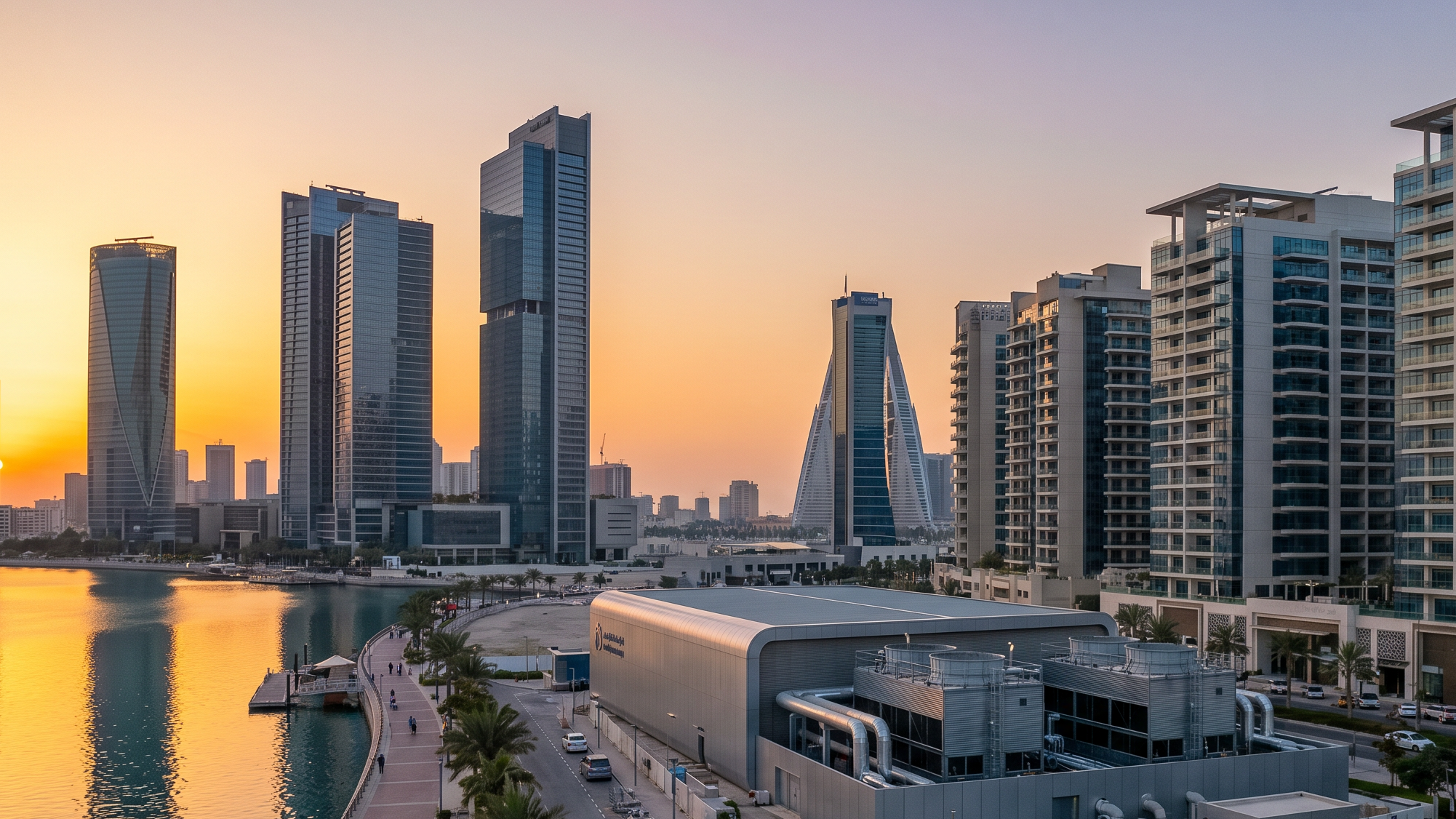
District cooling has become a key feature in modern real estate developments in Manama, particularly in premium waterfront and master-planned communities such as Reef Island, Bahrain Financial Harbour, Bahrain World Trade Center, The Avenues Bahrain, Bahrain Bay.
In Bahrain, most large-scale district cooling networks are operated by providers such as Tabreed and Bahrain Bay Combined Utilities, which manage centralized cooling systems across major residential, commercial, and mixed-use developments.
For buyers, tenants, and investors, understanding how district cooling works—and how it is billed—is essential when evaluating a property’s true cost of living and investment return.
What is District Cooling?
District cooling is a centralized air-conditioning system where chilled water is produced at a central plant and distributed to multiple buildings within a development.
Unlike traditional split or central AC systems:
- Cooling is supplied as a utility service
- No individual outdoor AC compressors are needed
- Billing is separated from electricity (EWA) consumption
This system is widely used in large-scale and high-end developments across Bahrain.
Why District Cooling is Used in Bahrain
Developers and master developers prefer district cooling systems (such as those operated by Tabreed and Bahrain Bay Combined Utilities) because they:
- Improve overall energy efficiency
- Reduce long-term maintenance costs for buildings
- Enhance architectural design (no visible external AC units)
- Support large, integrated urban developments
As a result, district cooling is mainly found in premium, waterfront, and commercial zones.
Key Areas in Bahrain with District Cooling
District cooling is not available everywhere in Bahrain and is limited to specific master developments:
Reef Island
One of Bahrain’s premier waterfront residential communities, Reef Island is fully connected to Tabreed’s district cooling network, providing centralized air-conditioning services across the development.
Bahrain Financial Harbour
A major commercial and mixed-use destination in Manama, Bahrain Financial Harbour utilizes Tabreed’s district cooling infrastructure to serve its office towers and commercial facilities.
Bahrain World Trade Center
One of Bahrain’s most iconic landmarks, the Bahrain World Trade Center benefits from centralized district cooling services provided by Tabreed, supporting its office, retail, and commercial spaces.
The Avenues Bahrain
The Avenues Bahrain, one of the Kingdom’s leading retail and lifestyle destinations, is connected to Tabreed’s district cooling network, helping maintain efficient climate control across the development.
Bahrain Bay
Bahrain Bay is a unique mixed-use waterfront development in the heart of Manama. Anchored by Arcapita’s headquarters, the Four Seasons hotel, and a growing mix of residential, commercial, and hospitality towers. Bahrain Bay runs on a centralized district cooling system rather than individual split units or window ACs. The plant is operated by Bahrain Bay Utilities
District Cooling Charges in Bahrain
Cooling costs are a major factor when evaluating rental or ownership expenses in Bahrain.
1. Capacity Charge (Fixed Cost)
- Monthly fixed fee based on apartment size
- Payable even if the unit is vacant
- Covers infrastructure availability
2. Consumption Charge
- Based on actual cooling usage
- Higher during summer months
- Lower in winter months
3. Monthly Service Charge
- Monthly fixed fee
What is EWA and How is it Different from Tabreed?
In Bahrain, utilities are mainly divided between two different systems: EWA and district cooling providers such as Tabreed and Bahrain Bay Utilities.
EWA (Electricity and Water Authority)
Electricity and Water Authority, commonly known as EWA, is the government authority responsible for supplying:
- Electricity
- Water services
In properties with traditional air-conditioning systems, the AC consumption is included within the tenant’s regular electricity bill issued by EWA.
District Cooling Providers
Tabreed and Bahrain Bay Utilities operate centralized district cooling systems in many large developments across Bahrain.
Unlike EWA:
- Tabreed does not supply electricity or water
- It supplies cooling as a separate utility service
- Cooling charges are billed independently from the EWA bill
This means residents in district-cooled buildings will receive:
- An EWA bill for electricity and water
- A separate bill for air-conditioning usage
Key Difference Between EWA and District Cooling
| EWA | District Cooling |
| Government utility authority | Private cooling utility operator |
| Provides electricity and water | Provides centralized air-conditioning |
| AC cost included in electricity usage (traditional buildings) | Cooling billed separately |
| Used across Bahrain | Mainly used in premium master-planned developments |
Why This Matters for Buyers and Tenants
Understanding the difference is important because many tenants assume cooling is part of the normal EWA bill. In district cooling developments, however, cooling costs are often charged separately and include:
- Fixed capacity fees
- Consumption charges
- Cooling caps in rental agreements
As a result, the total monthly utility cost can be significantly different from buildings using conventional air-conditioning systems.
Important: EWA Cap / Tabreed Cap System in Bahrain
✔ EWA Cap or Tabreed Cap System
In most rental agreements:
- The landlord covers a fixed monthly cap for cooling (or part of EWA/Tabreed charges)
- This cap represents the landlord’s contribution toward the tenant’s cooling usage
- If the tenant’s consumption exceeds the agreed cap, the tenant pays the additional amount
Example:
- Landlord covers BD 40/month cooling cap
- Actual monthly bill = BD 55
- Tenant pays the extra BD 15
This structure ensures shared responsibility rather than full landlord or tenant coverage.
Advantages of District Cooling
- High energy efficiency
- Quiet and stable cooling operation
- Cleaner building aesthetics (no external AC units)
- Reliable infrastructure in premium developments
Disadvantages of District Cooling
- Fixed monthly charges even without usage
- Less flexibility in controlling costs
- Can increase total cost of living
- Requires monitoring to avoid exceeding caps
Impact on Property Investment in Bahrain
For investors, district cooling—especially systems operated by Tabreed—can play an important role in enhancing long-term property value and tenant appeal.
Key considerations include:
- Net rental yield after cooling-related costs
- Whether the property includes an EWA or Tabreed cap
- Tenant preference for predictable utility expenses
- Competitiveness in the rental market
Properties with well-managed cooling structures and clear utility arrangements are often more attractive to tenants and can support stronger occupancy rates and stable rental returns.
Final Thoughts
District cooling in Bahrain plays an important role in shaping modern real estate, particularly in developments like Reef Island and Bahrain Bay.
With major providers such as Tabreed and Bahrain Bay Utilities supporting infrastructure across key districts, district cooling contributes to greater efficiency, convenience, and modern living standards.
Understanding how cooling systems and utility caps work allows buyers and investors to better evaluate opportunities, plan expenses confidently, and maximize the long-term value of their property investments in Bahrain.
Enjoyed this? Get more of OKA Real Estate in your Google results.
